 Buying a Replacement Door in Santa Ana: What Actually Matters
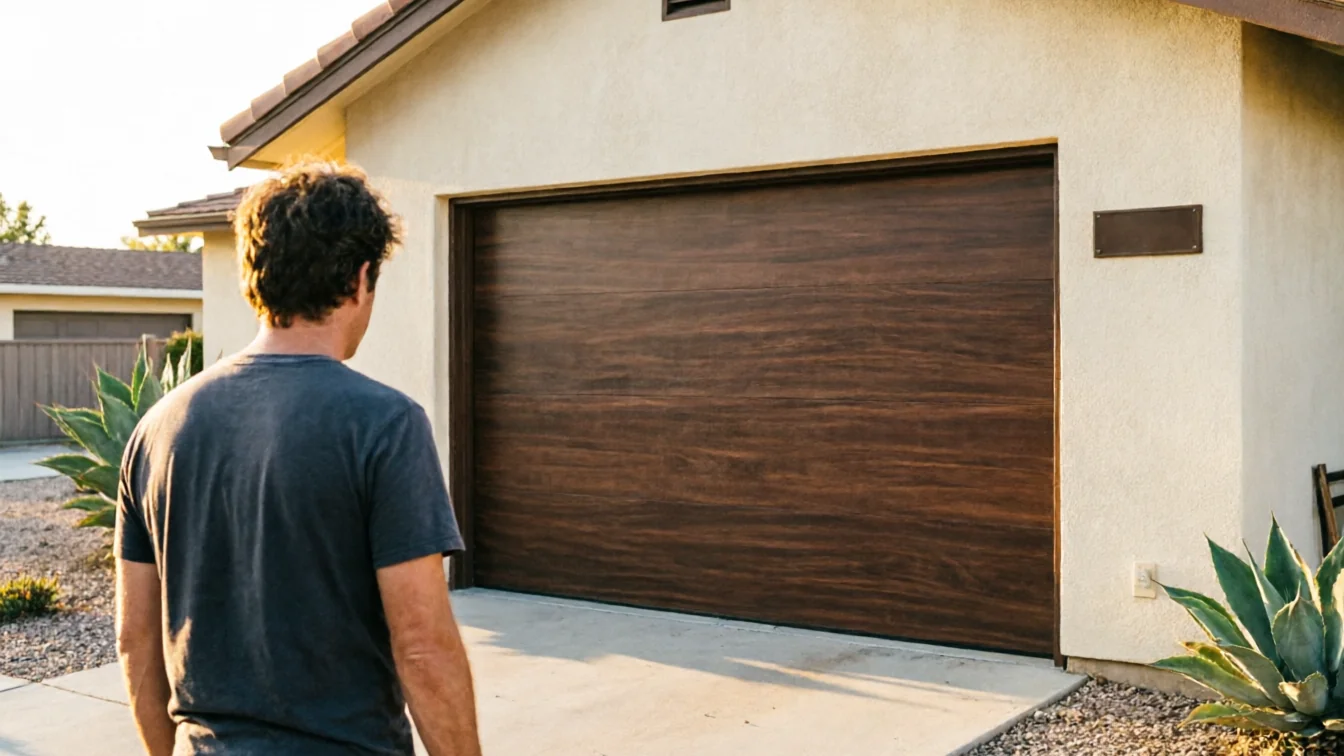
Thinking about buying a replacement door here in Santa Ana?
BlogSanta Ana, CA · 4 min read
That Noise Isn't Nothing - Here's What It's Telling You
A grinding, popping, or rattling door isn't random. In Santa Ana's older housing stock, each sound points to a specific worn part. Here's how to tell them apart.
Local detail
Doing Nothing For Now
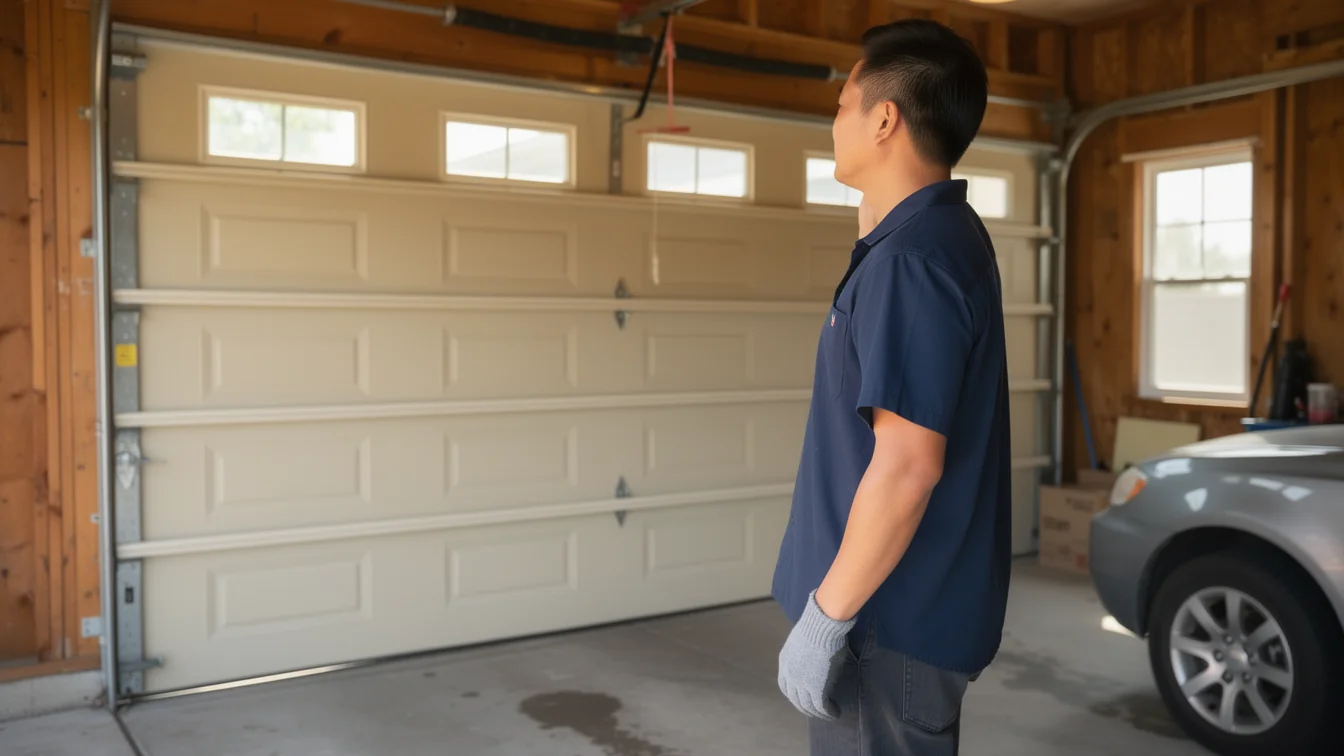
Not every sound needs a truck in your driveway today. A door that makes a light rattle on the way down, especially on a track with slightly loose mounting brackets, can often wait a week or two if the door still opens smoothly and stops where it should. Santa Ana's mild temperate climate works in your favor here - you're not dealing with the freeze-thaw cycles that crack hardware or shrink wood jambs in colder regions, so a minor rattle usually stays a minor rattle instead of turning into a cracked panel overnight.
That said, "wait and see" has limits. If the noise changes pitch, gets louder, or starts happening on every single cycle instead of occasionally, that's the hardware telling you it's past the point of ignoring. A squeak that shows up only in the first cold snap of the morning and fades by afternoon is usually just dry rollers - a problem you can often handle yourself with the right lubricant on the roller stems and hinges, not the track itself. Spraying the track is actually one of the more common mistakes we see, and it doesn't fix the noise; it just moves grime around.
The area
When It Stops Being a DIY Job
A lot of Santa Ana homes were built between 1938 and 2005, with the bulk of the stock going up in the 1960s and '70s across the area's older neighborhoods. That means a large share of the doors in this city are still running on original or first-replacement torsion hardware - springs, drums, and cables sized for a door that's now 50-plus years old. When a spring on that kind of setup starts making a sharp, metallic popping sound under tension, that's not a lubrication problem. That's a spring getting ready to let go, and torsion springs store enough energy to cause real injury.
Same goes for a loud bang followed by the door refusing to move - that's almost always a broken spring, and it's not a project for a Saturday afternoon and a ladder. Cable fraying near the bottom bracket, a drum that's visibly slipped sideways, or an opener that grinds and strains without moving the door at all are the three noises where we'd tell you flat out: stop operating the door and call. We'd rather get that call before someone gets hurt than after.
What we find
How Local Conditions Play In
Because this part of Orange County sits in a mild temperate band, the noises you hear here tend to come from age and dust rather than from extreme weather stress. You won't get the ice-driven track misalignment or the wood-swelling jamb binds that cause noise complaints in harsher climates. What you do get, steadily, is dry grit working into roller bearings and hinge pins over years of warm, dry cycling - a slow click-click-click that builds gradually rather than showing up overnight.
Across the 41 named areas that make up this service region, the housing stock is fairly consistent - mostly 1960s and '70s construction - which means the noise patterns repeat house to house. A worn nylon roller on a steel track sounds almost identical whether it's in a home near the center of SantaAnna or out toward the edges of the service area. That consistency is actually useful: it means when you describe a sound over the phone, we usually have a good idea what we're dealing with before we even see the door.
How we work
What Is Going On
A few sounds you can diagnose yourself before calling anyone. A rhythmic thump as the door travels usually means a flat spot on a roller, worn from years of the same door running on the same wheels - common on the original hardware still found in a lot of this city's 1960s-70s housing. A high squeal that rises as the door opens points to a hinge that's lost its lubrication, not a structural problem. A deep, resonant boom right when the door starts moving is frequently the torsion spring taking the initial load - fine if it happens once, worth checking if it happens every time.
The noise we take most seriously is a grinding sound from the opener motor itself, especially paired with the door moving slower than normal. That combination usually means the opener is working harder than it should, often because the springs underneath it aren't doing their share of the lifting anymore. We'll say plainly: if your door is making that sound and the springs look original to a decades-old house, replacing the springs is almost always the right fix - not a tune-up, not more lubricant.
Questions
Common questions
Why does my garage door only squeak in the morning?
In mild climates like Santa Ana's, overnight humidity settles slightly on metal parts and burns off by afternoon. Dry hinges and roller stems squeak more when there's any moisture present, then quiet down as things dry out. It's a lubrication issue, not a sign of damage, but it will keep coming back until the hinges and rollers get serviced.
Is a loud bang from the garage always a broken spring?
Not always, but it's the most common cause, especially in homes still running original torsion hardware from the 1960s and '70s. If the door won't move after the bang, treat it as a broken spring until proven otherwise and stop trying to operate the door manually or with the opener.
My door is quiet going up but noisy coming down. Why?
Gravity does more of the work on the way down, so slack or wear in the cables and drums shows up more on descent. A rattle only on the downward cycle often points to a cable that's starting to fray or a drum that's shifted slightly on the shaft.
Can I just spray WD-40 on everything that's noisy?
Spraying the track is a common mistake - it attracts dust and doesn't lubricate the parts that actually move against each other. Rollers, hinges, and the opener chain or screw benefit from a proper garage door lubricant; the track itself should stay dry.
Recommendation
You Might Also Like
More garage door guides for Santa Ana homeowners.
Buying a Replacement Door in Santa Ana: What Actually Matters
Thinking about buying a replacement door here in Santa Ana?
 What an Uninsulated Garage Door Means for a Santa Ana House
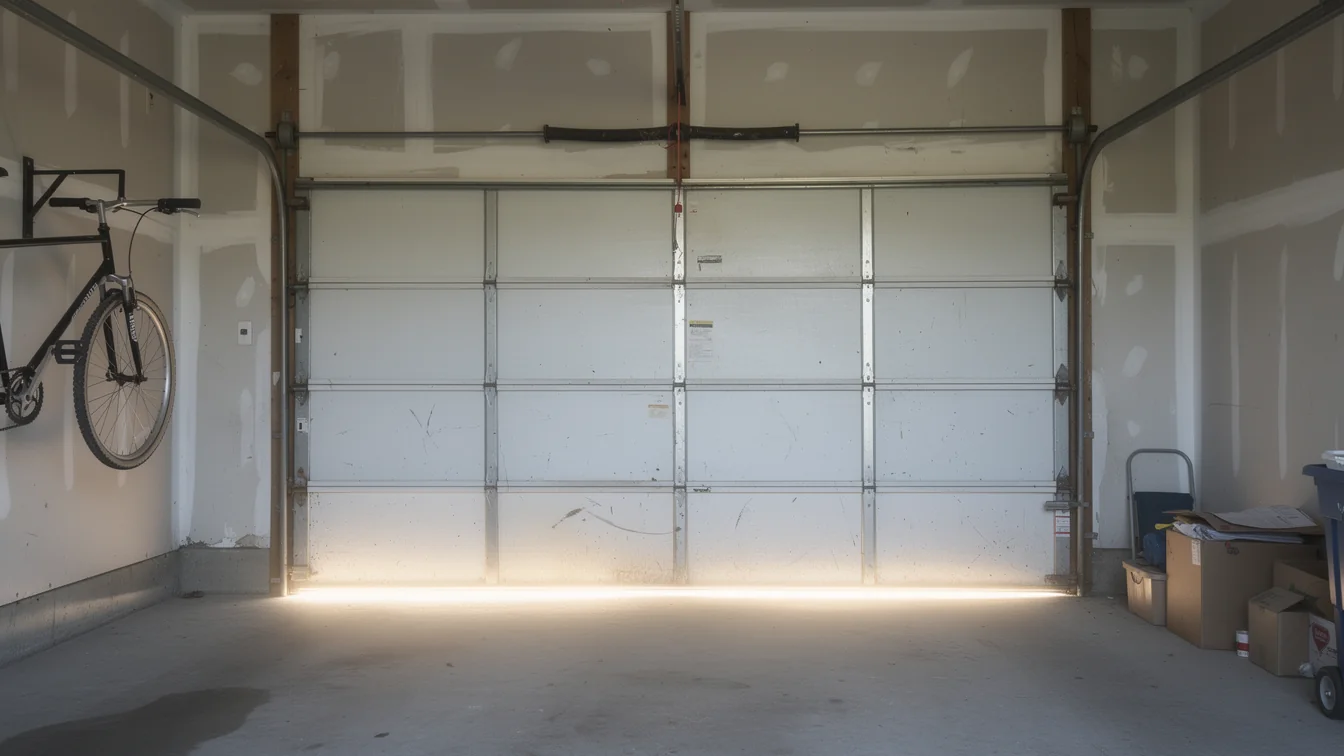
Santa Ana's housing stock runs 1938-2005, with most of it built before modern insulation codes.
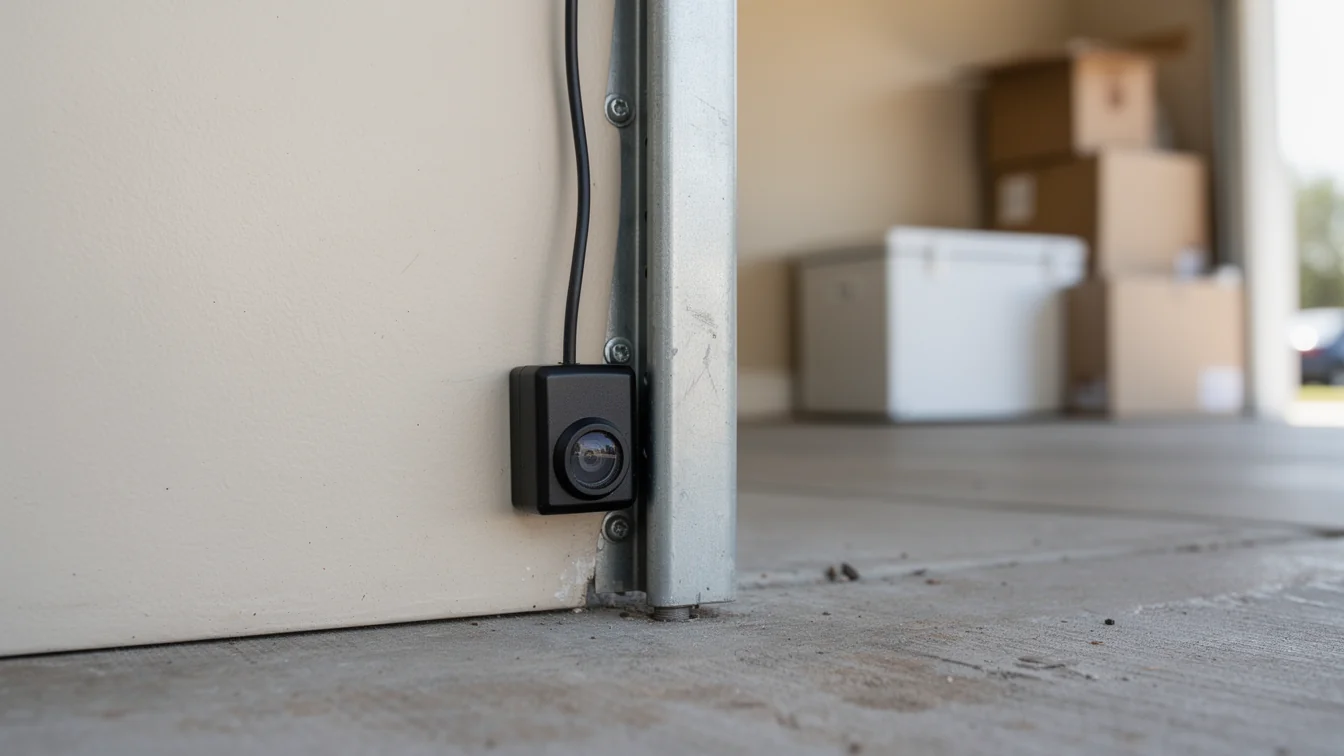 Why Your Garage Door Sensors Keep Drifting in Santa Ana
Santa Ana garage door safety sensors drift for reasons tied to this city's older tract housing and mild climate.
Ready when you are
Need a garage door sorted in Santa Ana?
Santa Ana Garage Door Pros repairs and installs garage doors, springs and openers in Santa Ana, CA and the surrounding area.