 Buying a Replacement Door in Santa Ana: What Actually Matters
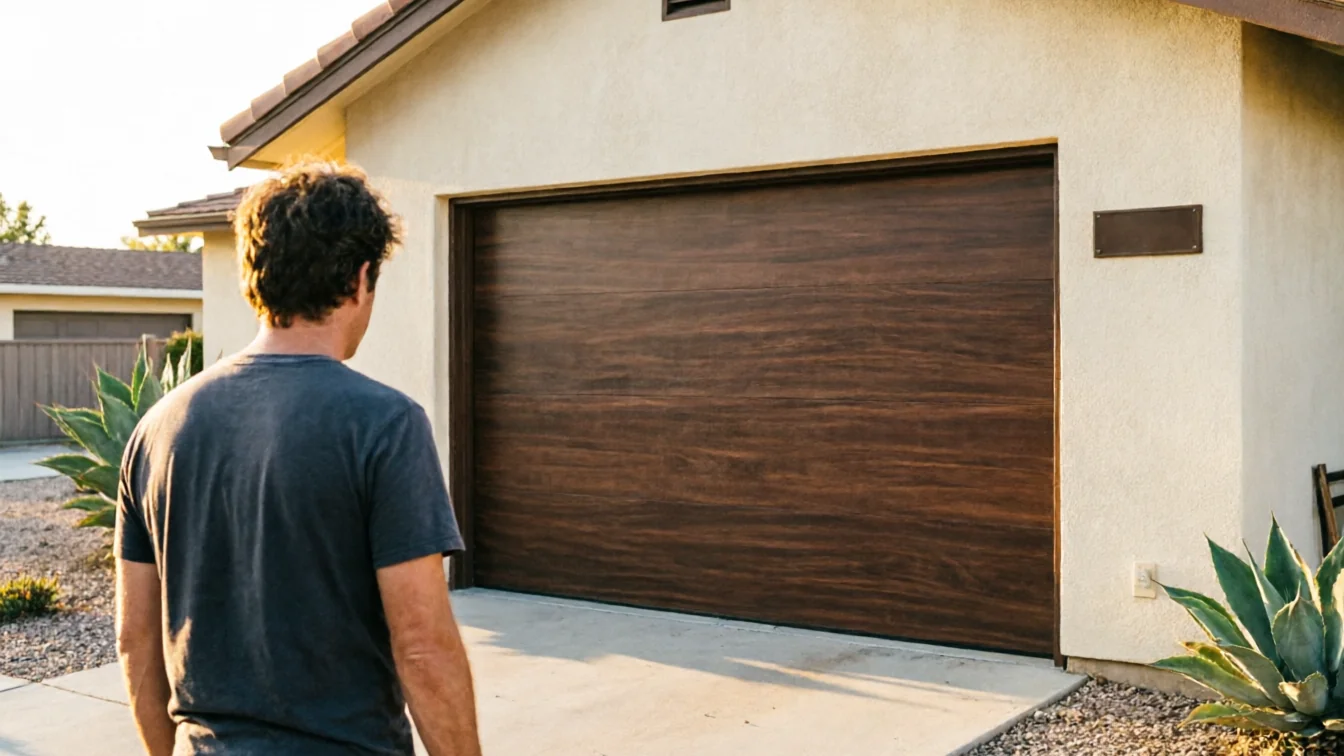
Thinking about buying a replacement door here in Santa Ana?
BlogSanta Ana, CA · 4 min read
What We Check First on a Santa Ana Door
A look at what a Santa Ana garage door tech checks first, tied to the 1938-2005 housing stock and mild coastal climate that shape wear patterns here.
Local detail
Doing Nothing For Now
Not every noisy door needs a truck. If the door still opens and closes on command and the cables look even on both sides, you can often wait. A lot of the housing stock through this area went up between 1938 and 2005, with the median closer to 1970, so a good share of doors and openers are original or on their second set of hardware. If yours is one of the quieter ones, a once-a-season look at the rollers and hinges for surface rust or hairline cracks is enough to buy time. Hold off on spraying anything heavy into the track - grease attracts grit, and grit is what wears a roller groove flat. A dry silicone spray on the hinges and a visual check of the bottom bracket covers most of what needs doing until something actually changes. If the door is slow to respond or drifts an inch after you hit the button, that's a different conversation, but a door that just squeaks on a cool morning and quiets down by noon is not an emergency.
The area
When It Stops Being a DIY Job
The line is the torsion spring and anything attached to it under tension. If a cable has jumped the drum, if the spring is visibly separated, or if the door won't lift past a few inches without binding, that's the point to stop and call rather than keep testing it by hand. Homes built in the 1960s and 70s across the named areas in this service region often carry the same torsion hardware they shipped with, and those springs don't advertise how close they are to failing - they just let go. We also draw the line at anything involving the opener's circuit board if the door itself still moves fine by hand; chasing an electrical fault on a door with a tired spring just means paying twice. One honest limit: if a panel is cracked through or the track is bent more than slightly, we're not going to recommend a patch repair that won't hold - at that point replacement is the straight answer, even though it's the more expensive one to hear.
What we find
How Local Conditions Play In
This is a mild temperate climate, not a place with hard freezes or heavy humidity swings, so we're not chasing ice-cracked panels or swollen wood doors the way a tech somewhere colder or wetter would be. What we do see tied to the climate here is slow, steady dry-out: lubricant that thins faster in warm stretches, weatherstripping that goes brittle at the edges before it visibly tears, and galvanized hardware that holds up well against rust compared to coastal-adjacent towns closer to the water. On a service call, that means we're looking less for corrosion and more for things that have simply dried past their useful life - a stripped nylon gear in the opener, a spring that's lost tension gradually rather than snapping. The mild weather is kind to the metal; it's just not forgiving about regular lubrication, since nothing forces an owner to notice a dry track the way a storm would.
How we work
What Is Going On
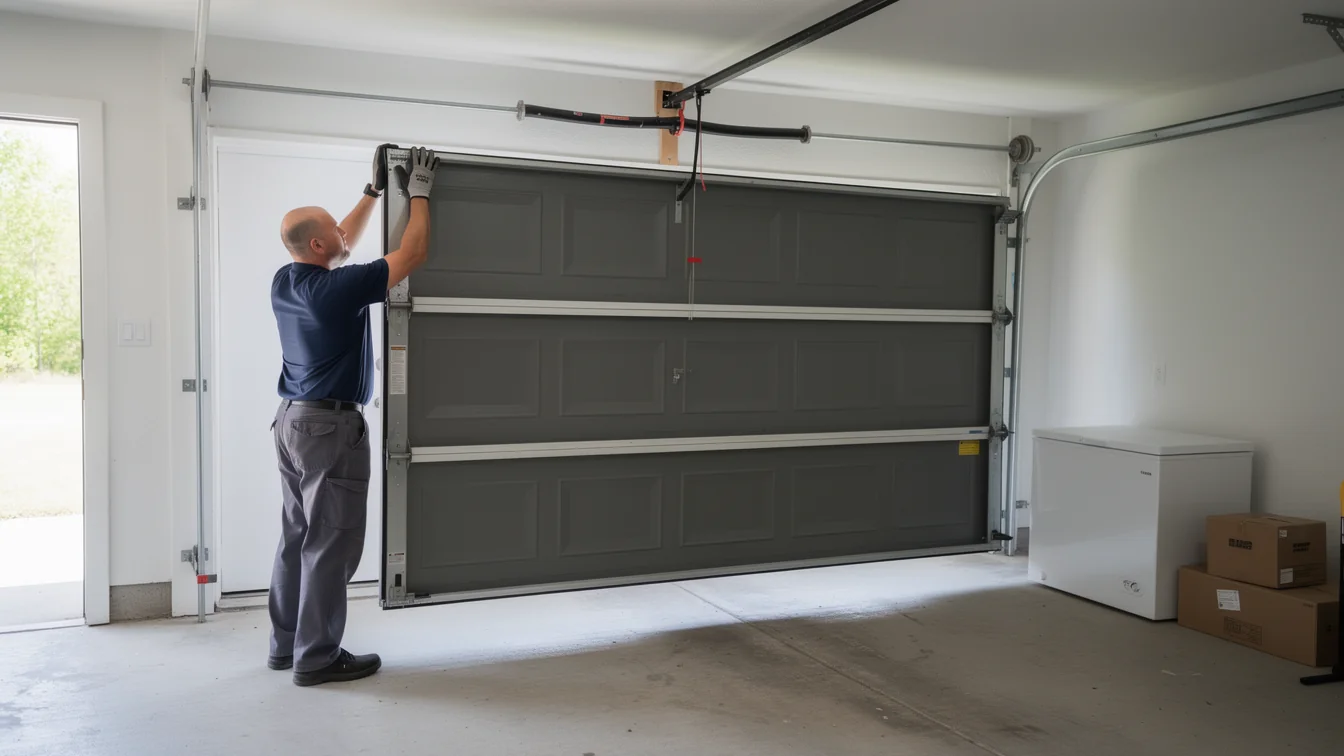
When we get to the door, the first checks are the same regardless of what the owner reported: spring condition, cable path, track alignment, and whether the opener's force settings are fighting the door's actual weight. Given how much of the stock here dates to the 1970s build era, a common finding is a door and spring combination that was sized correctly decades ago but has been rebalanced over the years with the wrong spring rate, so the opener is doing work the spring should be doing. We check the balance by disconnecting the opener and lifting by hand - a door that holds steady at waist height is balanced, one that drops or shoots up is not. From there it's usually clear whether the fix is a spring adjustment, a cable replacement, or, on older original hardware, a full torsion system swap. We don't guess from a phone description; the hand-lift test is the one check that tells us what's actually going on before any tools come out.
Questions
Common questions
Is my garage door opener too old to repair?
Age alone doesn't tell you much - what matters is whether parts are still available and whether the gear or circuit board has already failed. Given how many doors in this area date to the 1970s build era, we check availability before recommending replacement over repair.
Why does my door squeak more in some seasons than others?
In this mild temperate climate we don't get the freeze-thaw cycling that cracks hardware elsewhere, but lubricant still thins out during warmer stretches. A dry hinge or roller squeaking more on a hot afternoon is usually just asking for fresh silicone spray, not a sign of damage.
Can I tell if my spring is about to break?
Not reliably by sound alone. Visible gaps in the coil, a door that feels heavier than it used to when lifted by hand, or cables that look loose on one side are the signs worth stopping for. If any of those show up, that's the point to call rather than keep opening the door.
Do you work outside Santa Ana?
We serve the surrounding area including places like North Tustin, Westminster, and Villa Park. If you're not sure we cover your street, give us a call and we'll tell you straight.
Recommendation
You Might Also Like
More garage door guides for Santa Ana homeowners.
Buying a Replacement Door in Santa Ana: What Actually Matters
Thinking about buying a replacement door here in Santa Ana?
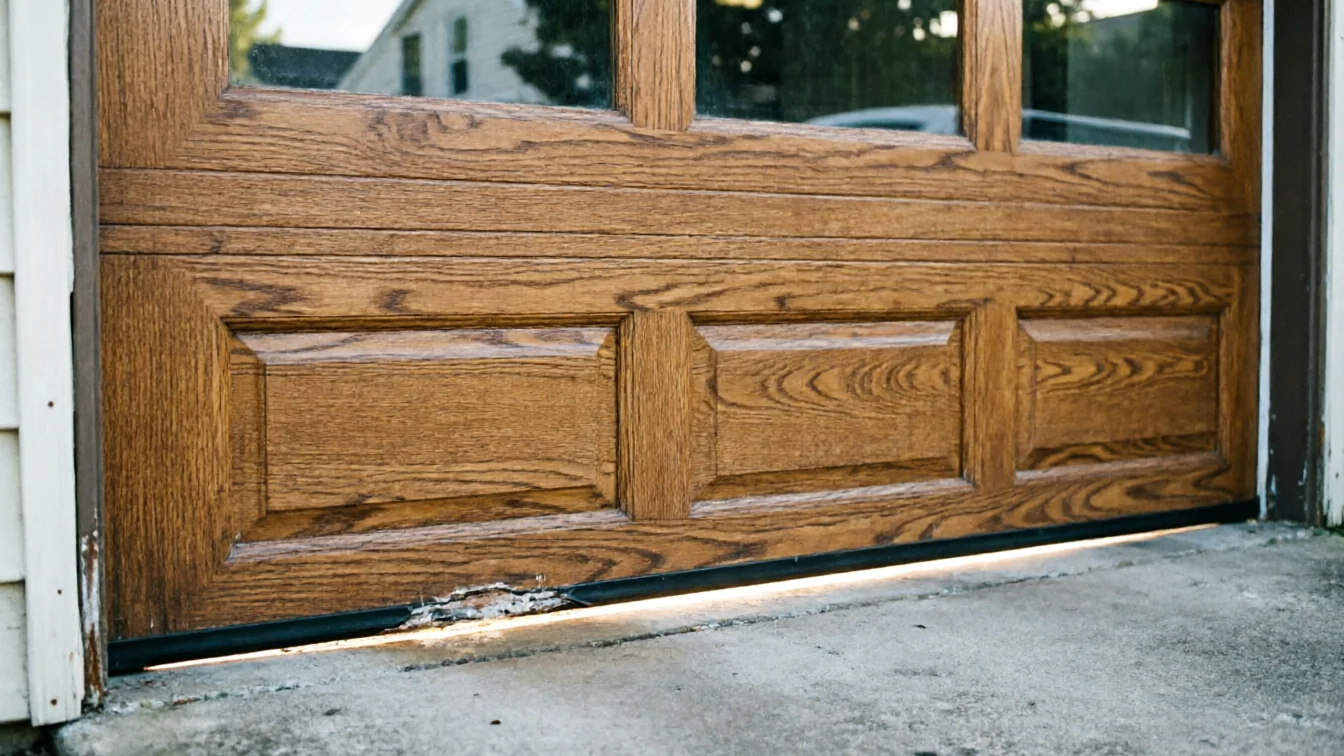 Why Your Garage Door Still Lets in a Draft
Santa Ana's 1938-2005 housing stock and mild climate wear garage door seals differently than you'd expect.
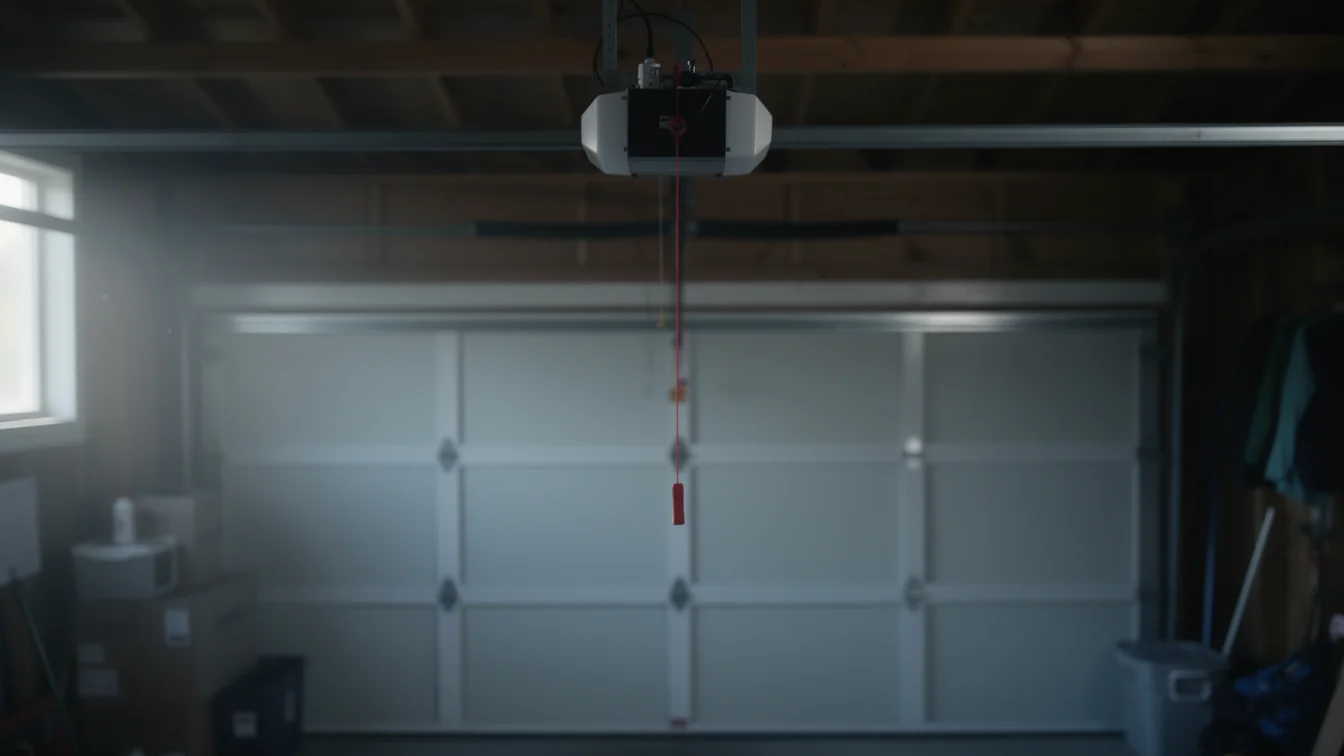 Openers, Power Cuts, and the Doors Santa Ana Actually Has
How Santa Ana's 1960s-70s housing stock and mild climate shape what happens to your garage door opener when the power drops, and when it's time to call someone.
Ready when you are
Need a garage door sorted in Santa Ana?
Santa Ana Garage Door Pros repairs and installs garage doors, springs and openers in Santa Ana, CA and the surrounding area.